

Why Kids’ Enamel Needs Extra Protection: What Adults Should Know
Enamel protection for kids is essential for their oral health. Because kids’ teeth have thinner enamel, they’re more vulnerable to cavities, damage, and long-term oral issues.1 By understanding why children’s teeth need extra protection and taking proactive steps early, caregivers can help their kids build strong, healthy smiles that last a lifetime.
Key Takeaways
- Kids’ thinner enamel makes them more vulnerable to cavities and enamel erosion.1
- Early loss of baby teeth due to cavities may cause permanent teeth to come in crooked or crowded, which may require orthodontic care.2,5
- Early oral care habits can strengthen tooth enamel in children and support lifelong dental health.2
Kids’ Teeth Have Thinner Enamel
Baby teeth, also known as primary teeth, have a thinner layer of enamel than adult teeth.1,2 Enamel is the outer layer of the tooth that protects the softer dental tissues, blood vessels and nerves inside. It’s the hardest substance in the human body and the first line of defense against tooth decay. But since younger kids have thinner enamel, they’re more susceptible to tooth decay and cavities.1
What’s more, new permanent teeth can take up to three years to fully strengthen! Support your child’s smile with kid’s toothpaste for enamel, like Pronamel Kids.
Kids May Be at a Higher Risk for Cavities
The thinner enamel on kids’ primary teeth means that your child’s teeth are more susceptible to decay and cavities.1,2 Tooth decay occurs when the bacteria that live in the mouth consume the leftover sugars and starches from what your kids eat, creating acid.3 Over time, these acids can eat away at tooth enamel, causing decay.3
Why Enamel Erosion in Kids Matters
A child’s primary (baby) teeth are essential for chewing, the first step in healthy digestion, help kids speak clearly, and smile brightly. They also help to create proper spacing in a child’s mouth for adult teeth to come in correctly.2
Common Causes of Cavities and Enamel Erosion in Children
- Consuming too many sugary foods and drinks3,4
- Lower saliva flow3,4
- Poor oral hygiene3
The thinner enamel of children’s primary teeth makes them more vulnerable to decay, making oral health a priority for caregivers.
Think Long-Term: Protecting Enamel and Oral Health & Development
Proper care of a child’s primary teeth helps to set the stage for a healthy mouth full of permanent teeth. Baby teeth hold space for adult teeth and help to guide them into the right position.2 If a child loses a tooth too early from decay, it can cause crowding, misalignment or other issues that may necessitate orthodontic care.2,5
Children’s mouths are still growing—just like the rest of them—and preventing tooth damage or infection protects not just their teeth, but also their jaw, gums and bite alignment.5
Issues with your child’s mouth and teeth can lead to trouble with5:
- Biting
- Speaking
- Chewing
Can Kids With Baby Teeth Get Braces?
Yes, kids who still have baby teeth may need braces.5 In some cases, treatment may be initiated when a child has a mix of baby and permanent teeth. A common reason that this may happen is to guide proper jaw growth, ensuring that there’s enough space for permanent teeth to emerge correctly.5 Taking proper care of your child’s primary teeth may help prevent tooth decay, tooth loss and the need for future orthodontic work.
Establish Oral Health Habits Early
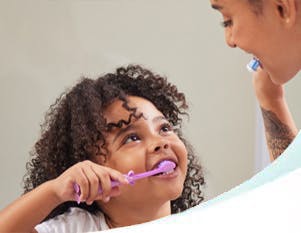
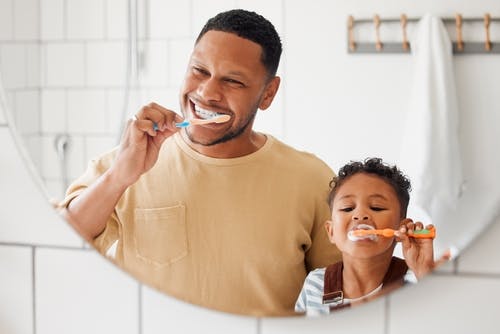
Parents and caregivers can help keep their children’s baby teeth cavity-free and establish some good oral health care habits that strengthen enamel in children from a young age:2
- Teach your child how to brush and floss by themselves. Your child will require supervision and a once over brushing by an adult until they are at least 6 years old or until they can tie their shoes unassisted.
- Make sure they brush for two minutes at a time, twice a day, using a soft-bristled toothbrush and, for children ages 2 and up, a pea-sized amount of kids’ toothpaste for enamel that contains fluoride
- Make water your child’s default drink
- Limiting acidic or sugary snacks and drinks
- Scheduling regular dental visits for cleaning and checkups
Caregivers, parents and siblings can help by modeling these habits in their own lives.
How Can You Strengthen Tooth Enamel in Children?
Because the enamel on primary teeth is thinner than on permanent teeth, and because new permanent teeth may take up to three years to fully strengthen, caregivers should do all they can to help strengthen their children’s enamel.1 This includes regular dental visits and brushing twice a day for two minutes each time with a toothpaste that’s designed by dentists and formulated for children, like Pronamel Kids.
Pronamel Kids: A Kids’ Toothpaste for Enamel
Pronamel Kids toothpastes were specifically designed to help protect against the effects of acidic foods and drinks. They’re gentle on enamel and provide effective cavity protection for new permanent teeth thanks to an optimized fluoride formulation, making them more resilient against acid attacks.
Pronamel Kids toothpaste flavors in Berry and Bubble Mint flavors help keep children’s teeth strong– to help defend against cavities and enamel wear.
Source Citations:
- What Every Parents Needs to Know About Baby Teeth. University of Illinois, Chicago School of Dentistry. https://dentistry.uic.edu/news-stories/what-every-parent-needs-to-know-about-baby-teeth/. Accessed 8.8.25.
- Baby Teeth. Mouth Healthy by ADA. https://www.mouthhealthy.org/all-topics-a-z/baby-teeth. Accessed 8/8/25.
- Tooth Decay (Caries or Cavities) in Children. Johns Hopkins Medicine. https://www.hopkinsmedicine.org/health/conditions-and-diseases/tooth-decay-caries-or-cavities-in-children. Accessed 8/8/25.
- Maintaining and Improving the Oral Health of Young Children. American Academy of Pediatrics. https://publications.aap.org/pediatrics/article/151/1/e2022060417/190307/Maintaining-and-Improving-the-Oral-Health-of-Young. Accessed 8/8/25.
- Can You Get Braces with Baby Teeth? A Guide to Early Orthodontics. American Association of Orthodontics. https://aaoinfo.org/whats-trending/does-my-child-need-to-wait-to-see-an-orthodontist. Accessed 8/8/25.