


Brushing Your Teeth: A Step-by-Step Guide
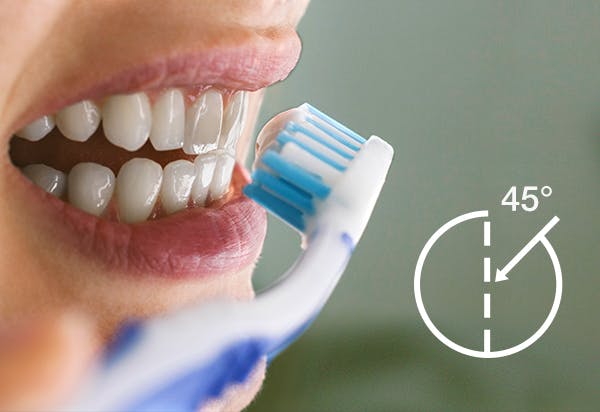
For a healthy mouth and smile, follow this guide for the proper way to brush teeth:1
- Place your toothbrush at a 45-degree angle to your gums.
- Gently move the brush back and forth in short (tooth-wide) strokes.
- Brush the outer surfaces, the inner surfaces, and the chewing surfaces of your teeth.
- To clean the inside surfaces of your front teeth, tilt the brush vertically and make several up-and-down strokes.
What Kind of Toothpaste Should I Use?
Brush your teeth with a fluoride toothpaste like Pronamel Clinical Enamel Strength Deep Clean.1 This fluoride toothpaste repairs 66% of acid-weakened enamel micro-damage* and provides 24/7 enamel protection and helps stop early-stage cavities.^
How Often Should You Brush Your Teeth?
The ADA recommends brushing your teeth twice a day using a soft-bristled toothbrush and fluoride toothpaste.1,2
Best Kind of Toothbrush for Proper Brushing Technique
Choose a toothbrush that fits your mouth comfortably, allowing it to reach all the surfaces of your teeth. It can be manual or powered, so long as you replace it every 3-4 months or whenever the bristles become frayed.2
Why Do I Need a Soft Toothbrush?
A soft-bristled toothbrush is preferable because it’s less likely to cause damage to your gums and enamel.2
How Often Should I Floss?
Clean in between your teeth with floss or another interdental cleaner once a day to help remove bacteria that lingers between the teeth where a toothbrush can’t reach.1
How Long Should You Brush Your Teeth?

Brush your teeth twice a day for two minutes each time.2 Those four minutes of toothbrushing a day can make a big difference in your oral health!2
Why Do We Brush for Two Minutes?
Data has shown that brushing for two minutes removes significantly more plaque from your teeth than brushing for a single minute.3 A good way to think of it is that you’re spending one minute on your top teeth and one minute on your bottom teeth, or about four seconds per tooth.3
Techniques and Tips for Brushing Your Teeth
Now that you’ve got the basics down, use these tips to dial in your toothbrushing technique:
Brush Your Teeth Gently

Studies have shown that excessively vigorous brushing may damage enamel.4 If the surface of your teeth is already compromised due to mineral loss, forceful brushing can cause further harm to the enamel.4 To practice good oral hygiene and avoid damaging your teeth or gums, gently move your toothbrush back and forth in short strokes.1
Remember to brush all surfaces of your teeth, including outer surfaces, the inner surface, and all chewing surfaces.1 If you struggle reaching the inside of your teeth, try tilting the brush vertically.1
How Long Should I Wait After Eating to Brush My Teeth?

The ADA recommends waiting at least an hour after eating, especially after eating acidic foods, to give your saliva a chance to wash away any remaining acids and remineralize enamel.5 Another tip is to limit the amount of carbonated, sour, or citrusy drinks you consume.5
Should You Brush Your Tongue?
Some people choose to brush their tongue with their toothbrush, but according to the ADA, there’s no evidence that brushing or scraping your tongue will reduce or prevent bad breath.6 If you like the way your mouth feels after brushing your tongue, keep it as part of your oral health routine, just know it isn’t a necessary step.6
Should You Brush Your Gums?
Brush carefully and gently along the gum line, using small circular motions and short, back-and-forth strokes.7 This can help reduce plaque buildup along and under your gumline.7 If not removed, this plaque can cause an early form of gum disease: gingivitis.7
How Do I Care For My Toothbrush?
It’s important to brush your teeth twice each day, but all that brushing will wear out your toothbrush over time. Here’s how to care for your toothbrush, so you can use it to care for your teeth:2
- Don’t share your toothbrush, as it can lead to an exchange of bacteria between people.
- Clean your toothbrush thoroughly by rinsing it under water each time you use it to remove any remaining debris.
- Store your toothbrush upright and allow it to air dry; keeping it in a moist environment promotes the growth of bacteria.
- Replace your toothbrush every three to four months. If the bristles of your toothbrush become matted or frayed, replace it more frequently.
Should I Floss or Brush First?
Research suggests that you should clean in-between your teeth before brushing them.8 According to the American Association of Orthodontists, interdental cleaning as a first step helps to eliminate debris and plaque buildup from between teeth.8
How Do You Brush Your Teeth with Braces?
Your orthodontist will give you specific instructions for caring for your teeth with traditional braces, otherwise known as a fixed orthodontic appliance.9 That said, you may need to be a little more vigilant about keeping your teeth clean, especially if you’re wearing traditional braces and not a removable appliance:9

- Carry floss or an interdental aid, a travel toothbrush and fluoride toothpaste with you so you can brush when you’re away from home.
- Oral hygiene is crucial to the success of orthodontic treatment; if plaque and food debris are left on the teeth and around the braces, the result can be cavities, swollen gums and bad breath.
- An interproximal brush can help to dislodge plaque and food particles that catch on brackets and wires.
- There may be some discomfort with braces, especially when adjustments are made, but this is temporary.
Brushing your teeth properly is one of the most important parts of a healthy dental care routine.1 Keep your mouth and teeth healthy by brushing and cleaning between your teeth each day. To learn about maintaining healthy teeth and gums, explore more articles from Pronamel.
*acid-weakened enamel, on average as shown in 7-day lab test
^with twice daily brushing
Source Citations:
- Brushing your teeth. MouthHealthy. https://www.mouthhealthy.org/en/az-topics/b/brushing-your-teeth. Accessed 8/5/2022.
- Toothbrush. MouthHealthy. https://www.mouthhealthy.org/all-topics-a-z/toothbrushes. Accessed 8/27/2025.
- Home Oral Care. American Dental Academy. https://www.ada.org/resources/ada-library/oral-health-topics/home-care. Accessed 8/27/2025.
- The role of oral hygiene: does toothbrushing harm? National Library of Medicine. https://pubmed.ncbi.nlm.nih.gov/24993269/. Accessed 8/27/2025.
- Erosion: What You Eat and Drink Can Impact Teeth. MouthHealthy. https://www.mouthhealthy.org/all-topics-a-z/dietary-acids-and-your-teeth. Accessed 8/27/2025.
- Tongue Scrapers and Cleaners. MouthHealthy. https://www.mouthhealthy.org/all-topics-a-z/tongue-scrapers. Accessed 8/27/2025.
- Taking Care of Your Teeth and Mouth. National Institute on Aging. https://www.nia.nih.gov/health/teeth-and-mouth/taking-care-your-teeth-and-mouth. Accessed 12/16/2022.
- Should I floss or brush first? American Association of Orthodontists. https://www.aaoinfo.org/blog/should-i-floss-or-brush-first/. Accessed 12/16/2022.
- Living With Braces: The Brace-Faced Adventure. American Association of Orthodontists. https://aaoinfo.org/whats-trending/life-during-treatment/. Accessed 8/27/2025.